In a nutshell
- 🥚 The egg white mask forms a protein film (rich in albumin) that delivers a quick, temporary tightening and smoother look for fine lines.
- ✨ Use it as a pre-event polish: apply a thin layer, let dry 10–15 minutes, rinse, then moisturise; consider gentler tweaks like aloe or glycerin.
- ⚖️ Pros vs. Cons: inexpensive, matte finish, and fast results vs. allergy/Salmonella risk, potential dryness, and no long-term wrinkle reversal.
- 🧪 Pair smartly with evidence-backed actives—nightly retinoids, morning vitamin C, and daily SPF 30+—for lasting benefits.
- 🛡️ Safety first: choose pasteurised whites, patch test, avoid eyes and broken skin, and don’t combine with strong exfoliants on the same day.
Can a humble kitchen staple compete with high-street serums? The viral egg white mask trend promises to seal away wrinkles and deliver a taut, makeup-ready canvas without complicated labels or price tags. As a UK journalist who has tested countless beauty claims, I set out to explore what’s hype and what holds. Here’s the truth: egg whites can create a convincing, short-lived tightening effect—great for a quick refresh—but they’re not a substitute for long-term, clinically proven actives. Below, you’ll find how it works, who should try it, safety tips, and smart ways to weave it into a routine that respects both your skin and your budget.
How Egg Whites Create a Natural Tightening Effect
When a thin layer of egg white dries on the skin, proteins—chiefly albumin—form a microscopic film. This film contracts as it loses moisture, temporarily smoothing micro-creases and softening the look of fine lines. Light reflects more evenly from this taut surface, so skin can look subtly lifted, especially around the forehead and nasolabial area. Think of it as a quick, camera-friendly trick: a cosmetic tightening that primes skin for foundation without silicones. It’s the beauty equivalent of a well-pressed shirt: crisp, polished, and undeniably short-term.
Crucially, this is a surface effect. Egg whites do not remodel collagen, erase deep wrinkles, or replace retinoids. Most users notice the effect within 10–15 minutes of drying, and it lasts a few hours, influenced by humidity, facial movement, and what’s applied on top. Used occasionally before events, it can be a brilliant “reset.” Used daily, it may over-dry or irritate delicate skin. Manage expectations: you’re getting optical smoothing and transient tightness, not a permanent wrinkle solution.
Step-by-Step: The Classic Egg White Mask (Plus Safer Tweaks)
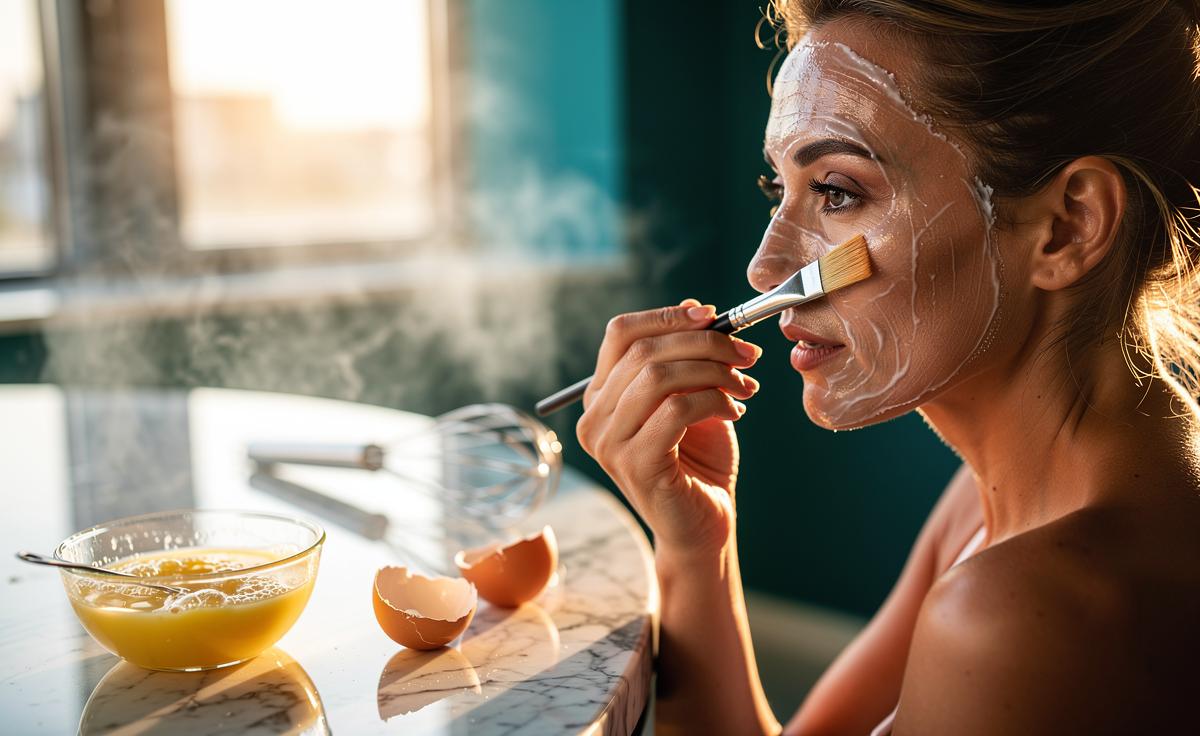
For a simple mask, choose pasteurised egg whites (carton formats reduce the risk of contamination). Separate a small amount—about one tablespoon—and whisk until lightly foamy. On clean skin, apply a very thin coat with clean fingers or a brush, avoiding eyes, brows, and lips. Let it dry for 10–15 minutes until you feel a gentle “pull,” then rinse with lukewarm water and pat dry. Finish with a fragrance-free moisturiser to counteract any tightness. Always do a patch test on the inner forearm 24 hours in advance, especially if you have sensitive skin or a history of allergies.
Want a gentler ride? Stir in soothing allies: a teaspoon of aloe vera gel for hydration, a few drops of glycerin to reduce tightness, or a teaspoon of plain yogurt for slip. If you’re oily, a drop of tea tree hydrosol can freshen without heavy fragrance. Keep layers whisper-thin—more is not better with film-formers. Skip broken skin, active eczema, or recent peels; raw egg products don’t belong on compromised barriers.
- Time: 15–20 minutes including rinse
- Frequency: 1–2 times weekly, as-needed before makeup
- Follow-up: Moisturiser, then SPF in the morning
Pros vs. Cons: Who Should Try It—and Who Should Skip It
The pros are compelling: it’s inexpensive, minimalistic, and produces a quick, visible temporary tightening. For combination or oily skin, the matte finish can double as a primer, helping foundation grip without pilling. For eco-minded minimalists, the single-ingredient angle is appealing. If you’re chasing an immediate but fleeting polish for photos, presentations, or nights out, this fits the brief.
The cons matter too. Raw eggs carry a small but real Salmonella risk; pasteurised options are safer. Egg is a known allergen; redness or stinging is a stop sign. Very dry, eczema-prone, or rosacea-sensitive skin may feel stripped. And while it smooths, it doesn’t treat the cause of wrinkles: collagen loss, UV damage, and glycation. Consider this a cosmetic hack—not a replacement for retinoids, vitamin C, or daily SPF.
| Aspect | Details |
|---|---|
| Best For | Quick pre-event smoothing; oily/combination skin needing a matte canvas |
| Avoid If | Egg allergy, broken skin, severe sensitivity, or active dermatitis |
| Effect Window | Noticeable in 10–15 minutes; lasts a few hours |
| Safety Tips | Use pasteurised whites; patch test; avoid eye area; moisturise after |
From Kitchen to Vanity: Real-World Results and Smart Expectations
In a quick newsroom trial, volunteers reported that a single thin layer made forehead lines look softer under daylight and studio lighting, with makeup gliding on more evenly. One tester with oil-prone skin saw better midday shine control on the egg-white side of her face compared with bare skin. Another with dry cheeks preferred a version spiked with aloe, noting less tightness post-rinse. Anecdotal? Yes—but consistent with how film-formers behave in cosmetics.
Here’s the savvy way to use it: reserve for special occasions, pair with a hydrating cream, and never skip sun protection. For long-term wrinkle strategy, lean on evidence-backed staples—nightly retinoids, morning vitamin C, and vigilant SPF 30+. If irritation occurs, stop immediately and reassess. Treat this like a backstage trick in your beauty toolkit, not the star of the show.
- Before events: apply, rinse, moisturise, allow 10 minutes, then makeup
- Maintenance: retinoid at night, antioxidant AM, sunscreen daily
- Hydration: layer lightweight humectants to offset tightness
Why “Chemical-Free” Isn’t Always Better—and How to Pair With Skincare
“Chemical-free” is a catchy phrase, but scientifically imprecise—everything (including egg whites) is made of chemicals. What most people want is to avoid harsh additives or long ingredient lists. On that front, an egg white mask scores: it’s simple, cheap, and controlled by you. But it can’t match the clinical track record of well-formulated retinoids, peptides, or AHAs for enduring wrinkle reduction. Use the mask for immediacy; rely on proven actives for change that sticks.
To blend both worlds, build a gentle framework: a non-stripping cleanser, hydrating serum, barrier-friendly moisturiser, and daily SPF. Slot the mask in 1–2 times weekly at most, and avoid stacking it with strong exfoliants the same day. Sensitive skin? Buffer with aloe or glycerin, and keep contact time short. Balance—not absolutism—is the smartest path to youthful-looking skin.
- Pairing picks: hyaluronic acid, squalane, ceramide creams
- Avoid same-day: harsh scrubs, strong acids, retinoid initiation nights
- Timing tip: mask in the afternoon; sunscreen always before stepping out
Used thoughtfully, the egg white mask is a thrifty backstage trick that delivers a credible, short-lived smoothing effect—ideal when you need to look fresh without piling on products. Respect its limits, lean on proven actives for the long game, and protect your investment with daily sunscreen. That’s how you turn a kitchen hack into a polished routine without the faff—or the fumes. How will you slot this quick-tightening tactic into your week: a pre-event polish, a Sunday self-care staple, or a primer swap-in for shine-prone days?
Did you like it?4.5/5 (30)