In a nutshell
- 🍋 Chemistry that counts: citric acid in lemon juice chelates minerals, lifts dulling residues, and delivers gentle brightening (not harsh bleaching) on cotton and linen; avoid silk, wool, and long soaks on elastics.
- 🧼 Practical method: Pre-treat stains 1:1 lemon and water, add 60–120 ml to the wash, run at 30–40°C (60°C if labels allow), and optionally use oxygen bleach in a separate stage; line-dry in sunlight for a UV boost.
- ⚠️ Safety and limits: Never mix lemon juice with chlorine bleach; keep doses modest to protect fibres, and note lemon isn’t hospital-grade—less effective on set-in dye transfer than oxidisers.
- 📊 Pros vs. alternatives: Pros include eco-friendliness, budget value, hard-water help, and low-temp performance; compare with oxygen bleach for stain oxidation, chlorine bleach for disinfection (harsher), and vinegar as a rinse aid.
- 🔧 UK troubleshooting: In hard-water areas, run a maintenance wash with 250 ml lemon to clear limescale, separate acids/alkalis across cycles, and consider detergents with optical brighteners to restore that shop-fresh white.
There’s a thrifty, citrus-scented secret making the rounds in British laundry rooms: using lemon juice to revive dingy whites straight in the wash. Powered by naturally occurring citric acid, this pantry staple can lift mineral residues, loosen dulling films, and sharpen contrast in cottons and linens. It’s a fast, low-tox route to brighter whites that won’t fog your kitchen like traditional bleach. From hard-water greys to underarm halos, the method is surprisingly versatile—and it pairs neatly with modern, low-temperature cycles. Below, I break down the chemistry, the exact steps, and the moments when lemons shine—and when they don’t—so your next white load emerges freshly luminous.
How Lemon Juice Works in the Drum: The Chemistry You Can Trust
At the heart of the trick is citric acid, the naturally occurring compound in lemon juice that excels at chelating (binding) mineral ions. If your whites look grey after multiple washes—especially in areas with hard water—tiny deposits of calcium, magnesium, and iron cling to fibres and trap soil. Citric acid grabs these ions and helps rinse them away, while its low pH (around 2) loosens dulling soap scum that ordinary detergent can leave behind. The result is a perceptible “brightening” effect rather than a harsh bleach, which is why you’ll often notice whites look crisper even after one cycle.
There’s also a mechanical benefit. By softening water inside the drum, lemon juice lets your detergent’s surfactants work more efficiently at lower temperatures—30–40°C is often enough. And because it’s not a chlorine oxidiser, lemon juice is kinder to most cotton and linen weaves. Caveats apply: skip lemon for silk, wool, or anything labelled “dry clean only,” and avoid long soaks for garments with elastane. Citrus can be mighty, but it’s still acid—use it smartly, not aggressively.
Step-by-Step: The 10-Minute Prep That Makes Whites Pop
This workflow keeps things simple and safe while delivering visible results on everyday loads of towels, sheets, tees, and school shirts.
- Check care labels and test colourfastness on hems if items include trims or prints.
- Pre-treat problem zones (collars, cuffs, underarms) with a 1:1 mix of fresh lemon juice and cool water; dab, wait 5 minutes.
- Load the machine. Add your regular detergent.
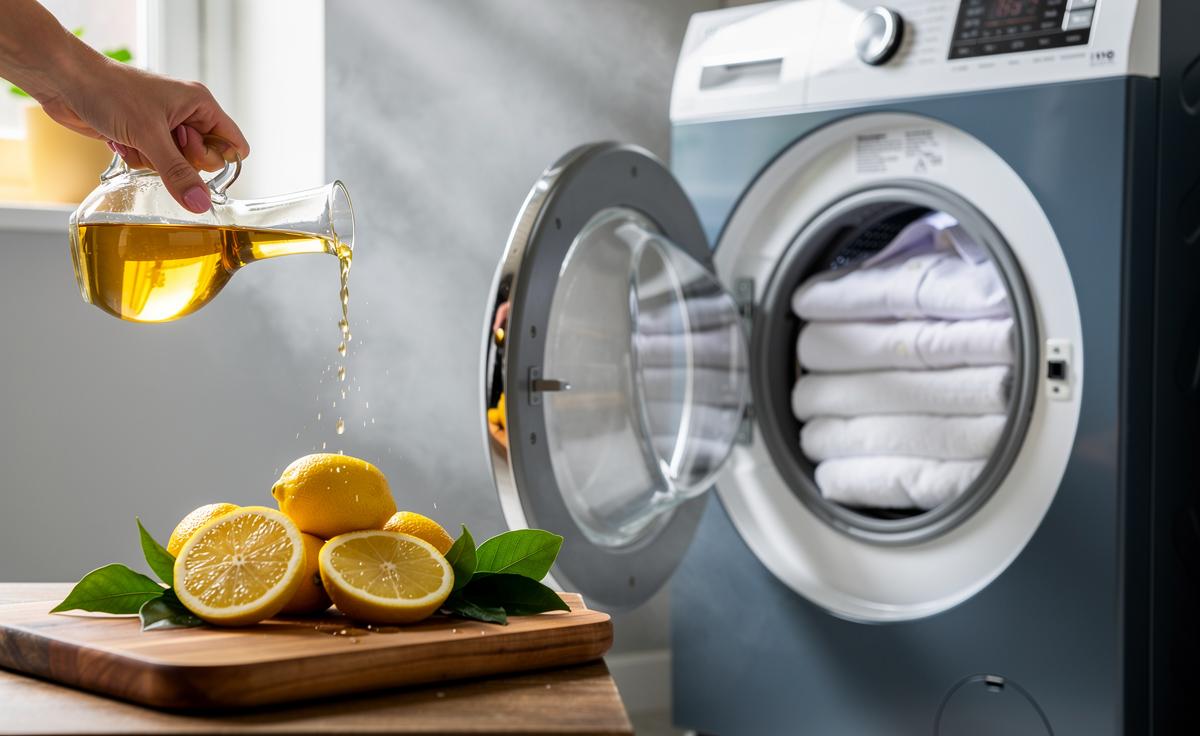
- Dosage: add 60–120 ml (4–8 tbsp) lemon juice directly to the drum or into the detergent drawer’s main wash compartment.
- Run a 30–40°C cycle. For heavy greying, extend to 60°C if fabrics allow.
- Optional boost: add oxygen bleach (sodium percarbonate) per pack directions—but run it in the main wash while putting lemon in the pre-wash to avoid neutralising effects.
Never combine lemon juice with chlorine bleach—acid plus hypochlorite can release dangerous chlorine gas. If you want sanitising power, use oxygen bleach or a detergent with built-in disinfectant instead. For lingering odours in towels, repeat the lemon treatment and add an extra rinse. Dry in sunlight when possible; UV light subtly enhances whitening, while the citrus prewash curbs that stubborn grey cast.
Pros vs. Cons: When Lemon Beats Bleach—and When It Doesn’t
For many UK households seeking gentler routines, the citrus route hits a sweet spot. But it’s not a universal fix. Here’s the balanced view.
- Pros: Effective mineral lift in hard water; fabric-friendly on cotton/linen; fresh scent; budget-friendly; biodegradable; works at low temps.
- Cons: Not a hospital-grade disinfectant; limited against set-in dye transfer; repeated long soaks may stress elastics; results can vary on heavily “dinged” whites.
Why “more” isn’t always better: Over-acidifying can leave fibres feeling harsh or weaken trims. Stick to 60–120 ml per load and avoid overnight soaks unless working on pure cotton linens.
| Whitening Option | Brightening Power | Fabric Safety | Best For | Cautions | Eco Impact |
|---|---|---|---|---|---|
| Lemon Juice | Moderate (mineral/film lift) | Good on cotton/linen | Greys from hard water, mild stains | Do not mix with chlorine bleach; avoid silk/wool | Low; plant-derived, biodegradable |
| Oxygen Bleach | High (oxidising) | Generally safe for colours/whites | Organic stains, overall whitening | Follow dosage; warm water helps | Moderate; breaks down to oxygen/soda |
| Chlorine Bleach | Very high | Harsh; can weaken fibres | Disinfection, tough whitening | Never mix with acids; ventilation required | Higher; can release irritant fumes |
| Distilled White Vinegar | Low–moderate (softening/rinse aid) | Good on most fibres | Odour control, residue removal | May not “whiten” like lemon | Low; biodegradable |
Bottom line: Use lemon for brightness and clarity, oxygen bleach for stain oxidation, and reserve chlorine bleach for rare, specific jobs. This layered approach maximises results with minimal fabric stress.
Troubleshooting and Real-World Scenarios in UK Homes
Hard water from kettles to washing machines can be unforgiving. If your whites still look fatigued, try this escalation path: run a maintenance wash (60°C, empty drum) with 250 ml lemon juice to clear limescale film, then launder whites with your standard 60–120 ml dose. Cleaner machines yield brighter laundry. For underarm shadows, pre-treat with lemon and a pinch of oxygen bleach paste (test first), then wash warm.
For baby muslins and school polos, keep it gentle: lemon in the main wash, oxygen bleach only when visibly stained. Avoid pairing lemon directly with bicarbonate of soda—acid and alkali cancel each other; if you’re using both, run them in separate stages (pre-wash vs main wash). With vintage linens, limit soak times and air-dry in sunlight for a subtle UV boost. If elastics are involved, keep contact time short. Resist the urge to pour—precision protects fibres and keeps results repeatable.
Finally, remember that “white” can fade due to optical brighteners washing out over time. Lemon can’t replace those fluorescent agents; if you want that shop-fresh glow, choose a detergent with optical brighteners and let lemon handle the dulling films and mineral haze.
Lemon juice won’t replace every whitener in the cupboard, but it earns a permanent spot beside the detergent for fast, fabric-safe brightening that respects both budgets and noses. Used with intention, it delivers instant clarity to tired cottons without the collateral damage of harsh oxidisers. Pair it with modern low-temp cycles, oxygen bleach for stubborn stains, and the occasional sunshine dry, and you’ve got a flexible, eco-lean routine that works across British water types. Will you try the citrus cycle on your next load—or do you have a different brightening ritual you swear by that deserves a road test?
Did you like it?4.6/5 (27)